
The Spirit(s) of Christian Cosmology
A response to "Shinto Christianity" by Brian Scarffe.

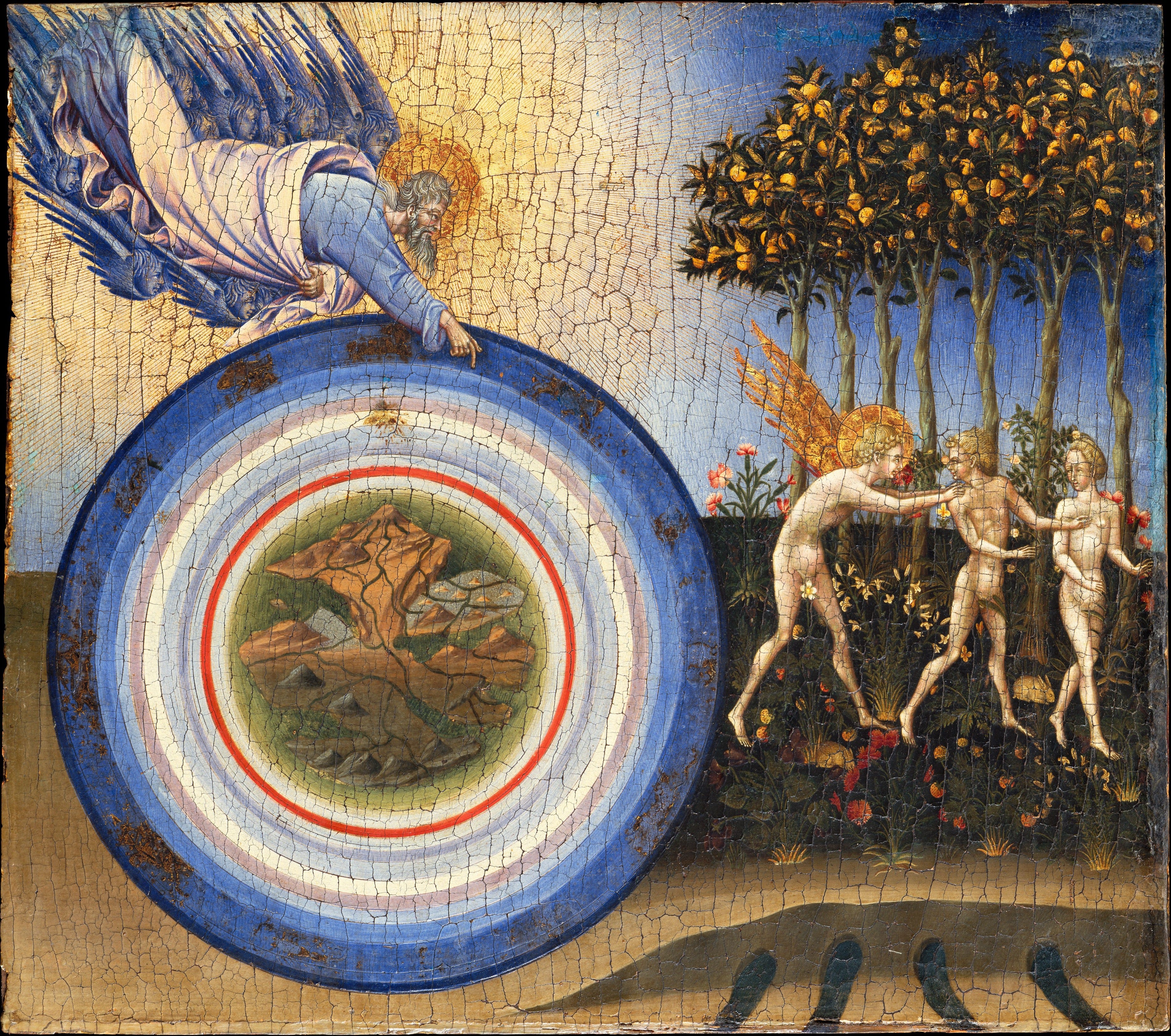
We all must, in humility, acknowledge our limitations. For me, as I endeavor to address such an undertaking as “Shinto Christianity” (Soothsayer), I must admit certain limitations I have in spite of my eagerness to enter into this discourse. I know about history, but I don’t know all that I’ve been able to evaluate as relevant. I know about Anglicanism, but I don’t know all that I’ve been able to evaluate as relevant. I know about Japan, but I don’t know all that I’ve been able to evaluate as relevant. I know about vitalism, but I don’t know all that I’ve been able to evaluate as relevant. In other words, while I have some grounding in what is relevant to this discourse, I find it moving a bit faster than I have, but I still have that eagerness to enter in. It’s not just eagerness compelling me, however. It’s edification. From what I do know so far, and have uniquely learned over and against others, there are things I know I have worth saying now. Moreover, what I know about what I don’t know, what I see as through a glass darkly, I can still determine that it’s understanding others should have, too. Which is to say, while I don’t know the exact substance of what I have yet to learn, I know it’s important to have knowledge of to be considered well-rounded, and so I should let others know, too.
Approaching the main subject more closely, I must say it’s something close to home. As an Anglican Christian I’ve long been attuned to the sense that Anglicanism is a tradition with a certain “feel” to it. That feel is of stately parish churches in the countryside, the rolling green hills of the Midlands, bubbling brooks running under ancient stone bridges, and all the various and splendid sights and sounds of Merry ol’ England. Such is particularly well exhibited in Blake’s popular poem-hymn “Jerusalem,” which lauds “England’s green & pleasant Land.” Henry Vaughan and George Herbert have also lent their energy and passion to this tradition. Indeed, the fame and familiarity of this sense in modern, non-English persons can certainly be accredited to the successive generations of English talents who have expressed this, from Shakespare, down to Tolkien, into Lewis, and even in Rowling. The English experience of Englishness isn’t little-known, and I trust that I have spoken enough already to bring this familiar sense to mind for those reading this. It’s something the Anglo-Saxon founders of American civilization, in all its folkways,1 were able to seed here, for even if this particular sense that the English have isn’t familiar, many Americans, those traditionally or aesthetically minded for sure, are fond of the “Heritage America” feel—something, perhaps, a bit kitschly encapsulated in 50s-era postcards and paintings. All of this “feeling of Englishness” that reaches from its cathedral cities to its brooks to its village farms, was reflected on by the historian David Starkey as manifesting an “English Shintoism—the English worshiping themselves.”2
This is what brings me back to Brian Scarffe’s “Shinto Christianity.” I have been a party to the discourse that this article arose out of, also involving folks such as 𝐀𝐋𝐋𝐇𝐄𝐀𝐑𝐓 and Europos, and so I am glad to see what was once inchoate chatter develop into something more orderly. I am also glad to see in this matter an awareness on Scarffe’s part against what I would be most concerned about:
I am not proposing some gauche appropriation of Japanese practices and aesthetics, neither the building of Follies in imitation of the Victorian aristocrats. Shinto is precisely the complete and organic expression of total Japaneseness throughout every sphere of society, and so it rightfully belongs to them alone. What I wish to discover is what our own natural spiritual genius analogous to Shinto is as Anglo-celts.
Yes, and a thousand times, yes. We don’t need to do the “trad” or “vitalist” equivalent of sappy Millennial women tweaking their chakras and manifesting good karma, among other pastiches of Hindu civilization. This relates to what I mentioned earlier concerning “what I do know so far, and have uniquely learned over and against others,” that I am studying Japan and seeking out the best works on this to that end. Enough with Wikipedia browsing, AI summaries, or trivia websites with no discernible author(s) or source(s). I’ve seen enough of these and know the degree of their worthlessness. Crack open some Bellah, Smith, Ohnuki-Tierney, Ono, Storm, Hardacre, Watsuji, Holcombe, Ames and Hall, Jansen, and the rest of them. Knowledge is out there for the taking. Now, this is not to say that I’ve thoroughly read all of these scholars and their respective works, but that also relates to the other bit I mentioned, “while I don’t know the exact substance of what I have yet to learn, I know it’s important to have knowledge of to be considered well-rounded.” These names are important craftsmen in the scholarly portrayal of Japan, and more or less help convey a holistic understanding of “Japaneseness,” even if they can’t also supply the lived experience that’s just as fundamental.3
If it’s not clear yet, what I have to say about Scarffe and company’s undertaking is far from disagreement or consternation, but merely refinement. That’s because I agree with it. However, because of my deep-seated Protestant pathology of loving the Bible, as well as a general conviction toward truth and accuracy, I want to make sure we do our best. So, there are two things I want to clarify: Shintoism and biblical cosmology. That’s what I will be emphasizing through the rest of this article.
What actually is Shintoism? There are a number of books on this. Ono’s, who I mentioned and linked to earlier, is a brief introductory work, whereas Hardacre’s, also aforementioned, is the academic standard. Shinto, most properly understood, “encompasses doctrines, institutions, ritual, and communal life based on kami worship,”4 and certainly has been cultivated “maintained from time immemorial” as Scarffe describes it, though a more “concrete” shape of it emerged only from the Asuka period on. As Davies puts it, “Its origins are obscure and lie in the nation’s prehistory—when the Japanese first became aware of themselves as a people, it was already there.”5 Shinto takes the form of ritual acts and spiritual awareness directed toward the ubiquity of supernatural forces in the world around humans:
Characteristic of all forms of Animism is their attribution of conscious life to nature or natural objects, and a belief in the existence of innumerable spirits which are thought to inhabit sacred places and which are intimately involved in human affairs. These nature spirits are thought to sanction human beings for neglect of ritual or breaking taboos, but not usually with regard to moral codes. Ceremonies are important, not in the sense of communicating with a divine creator, nor in terms of metaphysics or even how to lead a moral or ethical life, but are mostly concerned with the practicalities of daily life: securing food, curing illness, averting danger, obtaining profit, etc. The intervention of the spirit world is typically achieved through ceremonial offerings and ritual prayers.6
Davies, in what I think is a typically modernist analysis, thinks he can bifurcate rituality from morality, and so avers “Shintoist beliefs [did/do not] offer an explicit moral code,”7 however on the basis of how he struggles to “amorally” characterize Shinto beliefs, and on the basis of post-structural/secular anthropology I’m not convinced. To act as if there isn’t a value system encoded in chado or kegare-harae is a modern Western contrivance, which believes that “fact” is distinguishable from “value” and “subjective” distinguishable from “objective.”8
The reason why Shinto can be regarded (by modernist anthropologists) as “formless” is because it doesn’t have a built in universality to it—as Bellah notes, the 大和魂 (“Japanese spirit”) has a particular emphasis on particularity.9 The national kami of Japan, Amaterasu, is particularly the matron-ancestress of the Imperial House, and it’s through the chains of particular loyalties (孝) that intersect the Yamato realm that Amaterasu is established as the Lady of the eight venerable islands.10 Attempting to understand Shinto as a universal practice is what makes it formless, but understanding it as this carefully cultivated web of ritual practices and commemorations sensitive to local fidelities allows it to be seen more concretely. This, I suspect, is also why “When asked if they are religious, most Japanese people say no,” because “religion/religiosity/religiousness” has been introduced to Japan from purely Western sources, without first asking “what might this signify within Japanese horizons?” (something Storm discusses). Western civilization is naturally given to universalization, and to abstraction, but Japanese civilization remains particular and rooted. Hence, if religion is to be identified with the former it will appear absent and strange for the latter.11
An esoteric but ancient concept in Shinto mythology that also helps make sense of is 八百万の神, the eight million kami. This concept is mentioned in the two chief texts of the “Matter of Japan,” the Kojiki and Nihon Shoki, thus grounding it as “canonical.” Yet, it’s a concept that is very lightly mentioned by the leading works. In Hardacre, they are only mentioned as a given or in the cosmogonies of Shinto schools. In Bellah, Smith, Davies, Jansen, Ohnuki-Tierney, Holcombe and others don’t mention it at all. I don’t say this to repudiate it, for as I already pointed out it appears in the preeminent texts of the Japanese mythos. Instead I’m helping us understand two things: (1) this is truly an esoteric concept, and so (2) what we do understand about it must be weighed carefully for its authenticity and accuracy. The only two scholarly sources I’ve been able to find a reasonable exposition of the eight million kami in are a 1930 article by Tomoeda Takahiko and a 2012 book by Shinto master and popularizer Motohisa Yamakage, both of which happen to have the title “The Essence of Shinto.” Yamakage’s reference is more indirect, focusing on the whole “ecology of spirits” intimated in Shinto:
Kami are therefore not necessarily deities in the sense that is usually understood, but possess a wide variety of spiritual powers and attributes. Shinto can therefore be described as polytheistic in the context of its amatsukami, who correspond most closely to the idea of “gods.” However, it is also important to remember that all Kami are interconnected and spring from a single source—the essence of Shinto. Kami are both many and one, both individual entities and parts of a whole. The three categories of Kami described by the norito are not rigidly divided, but interact and overlap. Therefore the term “polytheism” is far from a full definition of Shinto.12
Takahiko’s exposition is a bit more “theological,” and perhaps to a perceptive reader might be faulted on the grounds of seeming Platonized, but I’ll still reference it anyway:
Ideas are productions of Heaven as reproduced in the actual world. This world is the place to actualize the ideas of Gods. Thus are human beings of all characters, and things of every form, born. So that all Gods (Yao-Yorozu-no-Kami, that is eight million Gods), all human beings, and all things are finally the manifestations of the first supreme God, that is Ama-no-Minaka-Nushi-no-Kami. The God is really the sole origin of the universe and life, or, we may say, the great principle of life. All things come from this supreme Life. The very idea of Life makes the centre of the doctrines of the universe and human life. The character of life is to extend itself.13
These rare expositions thus dovetail with other expositions of Shinto, such as Davies’, who we haven’t heard from for a little bit: “To the early Japanese the visible and invisible worlds were filled with powerful influences, and people believed in a vague way that all natural objects harbored a spirit, that all perceptible objects were in some way living.”14 While not one who mentioned the eight million kami, this is clearly referring to the same reality. That is the point of Shinto, that the whole world is animated, has a principle of life behind it, and thus we must learn how to live with that, how not to step on the toes of all these lives we engage with day-to-day, just as we would with the most visible and sensible lifes—humans, our neighbors.15 To foreshadow the Christian synthesis, Shinto could be seen as a cosmology of the Golden Rule, rather than just an anthropocentrism as with modern Christianity.
This, thus, dovetails with another fundamental of Shinto that is picked up on by the leading scholars. That is harmony, 和, a concept so fundamental to the Japanese spirit that it also composed the earliest name on record for it. Per Bellah:
To reduce an enormously complex set of phenomena to a very simple formula, I would say that Japanese religion is fundamentally concerned with harmony—harmony among persons and harmony with nature. Each strand of the tradition views harmony somewhat differently and offers its own peculiar approach. And yet each of them eventuates in the idea of life as ceremony, as play, almost as dance, in which what is being expressed is compassion, care for all the beings of the universe.16
Because the entire world is animate, the entire world is something that is set in motion, and just as with a carriage on the road its motion needs to remain stable lest it careen off the edge. This is a sense derived from a nation the size of the American Eastern Seaboard, from no point upon which the naked eye can observe another land, which for several thousand years has remained an undefiled whole, never meaningfully assaulted by foreign powers. A logos, a cosmic order, exists in Japan that the Japanese have been learning to cultivate for millennia, and have continued to pass down generation after generation. This is what likely contributes to what Scarffe has noted, how “Japan seems to have maintained a natural mysticism through its modernisation, and that despite having developed a cutting-edge technological aspect to its society, at heart the animistic attitude of Shinto prevails.” It’s because the Japanese are deeply inculcated to see things as for Japan, even more I’d say than the Chinese with their Zhongguo cosmology given how many times it has risen and fallen to outside cosmologies.17 Hence, when Roman Catholicism first came to Japan, with its clear Papal trappings, it was easy for the Tokugawa to flare their quills and expel it for the threat to wa. Alternatively, when Anglicanism, with its seeming Shinto contours, arrived, it was quick to demand autonomy from Canterbury to harmonize with the nation.18
In conclusion, Shinto represents two things: from an emic perspective, Shinto is the honoring and cultivation of the cosmic order spawned out of Ame-no-Minakanushi, raised out of the abyss by Izanagi, and warmly protected since by Amaterasu. From an etic perspective, Shinto is the honoring and cultivation of the order of Japan, maintaining the habits and boundaries that have maintained their mythos for ages. Yet, these are perspectives that may easily be blended, for the Japanese are naturally sensitive to particularity (as mentioned above), and the wider world is sensitive to the unique “Japanese way” of doing things—per an anecdote Robert Smith lifts out of Sports Illustrated, “If you ask a Japanese manager what he considers the most important ingredient of a winning team, he would most likely answer, wa. If you ask him how to knock a team’s wa awry, he’d probably say, ‘Hire an American.’”19
Now, what of biblical cosmology? Is it compatible with a sensitivity to how “all things are finally the manifestations of the first supreme God” (Takahiko) and “all perceptible objects were in some way living” (Davies)? If the Religionsgeschichtliche types were right and all religion was fundamentally animism, then the revolutionary monotheism of the Yahweh cult would have to contain traces of this primordial sensibility. However, if Moses is right, “In the beginning—God,” how does the story shift? Let me talk about myself a bit more. Many of my influences and attractions are interlaced, inseparable, so that I can find ways to relate my interest in Japan to my devotion as an Anglican. Likewise, my devotion as an Anglican certainly dovetails with my passion for the catholic tradition, and my affinity for St. Francis, who is certainly one of those “who never fell for the dead universe theory in the first place,” his predating of that misery notwithstanding. One of St. Francis’ greatest moments was his composing of the Canticle of the Sun, a wondrous piece of Christian music that summarizes his theology—the lauding by all creatures of the Creator God.20 However, where was St. Francis getting his worldview from? You don’t really need scholarly help to figure this out, but if it helps Moloney agrees that “the [model] Francis most obviously had in mind [was] psalm 148” which is interestingly supported by how his “personal breviary has survived…[and] shows that he would have sung or said psalm 148 every morning of the week.”21 If, then, we are inspired by St. Francis’ vibrant worldview, his “theo-animistic”22 vision, we should turn to Psalm 148 and properly understand what it’s narrating to us.
To that end, I have browsed three categories of commentary: patristic, Augustine and Theodoret; critical, Dahood plus Hossfeld and Zenger; theological, Goldingay and Byassee. Two main things I was trying to figure out from these sources were, first, what exactly the psalmist meant by commanding creatures (animate and inanimate) to “praise,” and, second, how exactly the psalmist understood Yahweh in relation to these creatures. The critical commentaries were good for understanding the structure of the psalm: a twofold division, heavens and earth, bookended by doxologies. The theological commentaries were good for understanding the sense of the psalm: God is so wondrous and mighty we can’t but praise Him, and indeed all things ought to praise Him because they owe all that they are to Him. It was Augustine and Theodoret, however, and perhaps expectedly, who helped communicate the cosmology of the psalm.
Consider Augustine’s exposition of the first verse, commanding the praise of the heavens:
And there are other things which have not breath of life and understanding to praise God, but yet, because they also are good, and duly arranged in their proper order, and form part of the beauty of the universe, which God created, though they themselves with voice and heart praise not God, yet when they are considered by those who have understanding, God is praised in them; and, as God is praised in them, they themselves too in a manner praise God.23
He makes much the same point later concerning the praise of dragons and abysses: “What? Think we that the dragons form choirs, and praise God? Far from it. But do ye, when ye consider the dragons, regard the Maker of the dragon, the Creator of the dragon: then, when ye admire the dragons, and say, ‘Great is the Lord who made these,’ then the dragons praise God by your voices.”24 Theodoret, likewise, equipped more with philosophical language, sets forth how “it is not as animate and rational things that he summons them together; rather, he urges us to gain an insight into this, to learn the wisdom of God, and to compose hymn singing to him through them all.”25 The way, then, the will of God is done by irrational, inanimate creatures (per v. 9), is in how they “yield to his wishes, not as animate and rational things, but as responding to his will: each of them is made as God decides.”26
The desire for a wild, enchanted, or traditional Christianity has often been bound up in terms of “weird.” The late Michael Heiser was instrumental in this, even if he didn’t frequent the same salons or use the same terms. He pointed how, contrary to pop Evangelical construals, the world of the Bible wasn’t just God/Jesus, me, my salvation, and my sin/the devil, but a vast cosmology of angels, demons, powers, principalities, sacred spaces, rituals, symbols, etc. A truly biblical cosmology is actually more in tune with this turn away from modernist reductionism, which chipped everything away from the faith and left such fundamental articles such as the Resurrection and Virgin Birth hanging on by a thread. However, I think we should also be mindful of the opposite extreme: multiplying the population of the biblical cosmology beyond necessity. It’d be great, wouldn’t it, if we happened upon a forgotten, ancient trail in an old European forest and along the way saw some sprites, heard the giggling of elves, and answered the tricks of gnomes? Perhaps. But is that the world (1) we need or (2) live in?
When Scarffe, quoting Newman, raises the query of whether “there was a middle race, neither in heaven, nor in hell; partially fallen, capricious, wayward; noble or crafty, benevolent or malicious, as the case might be” I want you to consider this: forget about elves, forget about gnomes, forget about ghosts, or whatever else, what does this sound like? A creature like this, does it exist? He certainly does, and his name is man. Read this passage from The Brothers Karamazov:
People talk sometimes of bestial cruelty, but that’s a great injustice and insult to the beasts; a beast can never be so cruel as a man, so artistically cruel. The tiger only tears and gnaws, that’s .all he can do. He would never think of nailing people by the ears, even if he were able to do it.
The glory of creativity is combined with the depravity of violence, gracious yet diabolical. Another esteemed Russian, Solzhenitsyn, made a similar point once: “the line dividing good and evil cuts through the heart of every human being.” Humans are the ones neither in heaven, nor in hell. We needn’t the elves, we needn’t the dwarves, though we can esteem what such “secondary world” constructs tell us. I think Tolkien, another progenitor of this “Wild Christianity” thought, understood this well.
Bringing this back to Psalm 148, I don’t think we should want or pry open the space in Scripture for what we want, but to appreciate Scripture for what it gives us, as any professed Christian ought to. If Psalm 148 isn’t about actually living water, dragons, winds, rains, etc., but about metaphor or instrumentality, so be it. Yet, two words of consolation. First, what even is “life”? Note that Theodoret only says reason and animation are the categories of life to be denied of all the things enumerated in the psalm, not life itself. The catholic tradition granted, from Aristotelian roots, a differentiation of vegetative, sensitive, and rational souls. It may very well be that rocks and water are “living,” but in a sense to be construed at least in one way: “not as humans are.” Second, if the praise of creatures are “in a manner” or “by” them but “truly” from humans, this shouldn’t be taken as “lesser,” unless we want to denigrate (a) humans or (b) Creation. Part of the Franciscan tradition, too, is the view of man as microcosm, as a mirror of the universe—Adam and Eve were ordained as priest-kings to put and keep Creation in order, and in falling from this duty this order fell through them (Rom. 5:12 ∥ 8:22). This can also be seen in Psalm 148’s concluding coda invoking Israel, for that land, through its covenant fidelity, was ordered toward being a type of the renewed Eden.27 Then, under theo-animism, it makes all the more sense why we should have a sensitivity and duty toward the world around us: because the world around us is consonant with the world within us.28
Even if Takahiko’s portrayal of Shinto cosmology, then, isn’t purely authentic, and does represent a Platonization derivative of his European schooling, then it’s still to be valued as a transitional portrayal: a pagan Shintoism refined as a Platonic Shintoism turning into a theo-animism. The eight million kami are not “manifestations,” but creations, and Ame-no-Minakanushi isn’t the first unbegotten primordial deity, but ipsum esse subsistens, the only God, unlike any thing under heaven or above the earth, “a God that hidest Thyself,” “dwelling in the light which no man can approach unto; whom no man hath seen, nor can see.”29 This immortal, invisible, God only wise, has established the world per a certain order, and everything is subordinate to him in their harmony, which is the intent of Psalm 148 to communicate. God has ordained for angels and men to be rational and animate amidst this, and even then angels are under men, merely awaiting his final and full glorification, and the rest of Creation swirls and swings around him. Here we have a “hymn that stirs all creation—both with intellect and with senses, both rational and irrational, both animate and inanimate—to a single harmony of hymn singing.”30
A “Shinto Christianity,” then, or a “theo-animism,” does have all the resources it needs to survive in the biblical cosmology, though it must be carefully tweaked. Christianity, contra Scarffe, doesn’t have a “risk” by “holding an overly simplistic black and white binary vision of the cosmos and its spirits,” and instead merely radicalizes what is inchoate in Shinto: you either harmonize, or you are flung away into outer darkness. “Choose you this day whom ye will serve,” is it “Better to reign in Hell, then serve in Heav’n”? Will you carry the Ainulindalë’s melody, or will you vainly grate against it? In embracing “the task of restoring and inventing a new our own veneration of and reintegration with the Nature which God has given us to serve and to guard” we needn’t look to Shinto as a man searches a toolbox for something he hitherto lacked, but rather as a wave which breaks against the one true Faith that, once we look back from cowarding, reveals the strength within it all along.
Instead of praying (or, forgive me, giving dulia) to the wind, instead of offering the Eucharist to a good harvest,31 instead of any number of other manifestations of actual syncretism, we can simply recover what was already there. Consider how Christians prayed over water to make it fit for the baptismal font: “God’s creature, water, I cast out the demon from you by the living God, by the true God, by the holy God, by God Who in the beginning separated you by His word from the dry land, whose Spirit hovered over you, who made you flow out of Paradise.” It’s a very personalized address, but it should be understood in context of those hearing it: it’s personalized for our sake, because by us, in our praise of God, we actualize the praise of this water for being liberated by the suffering of Creation and consecrated to holy use. Even in the blessing of animals, the prayers were always dedicated to God on behalf of the animals, by the agency of the humans. On the Great Vigil of Easter many catholic Christians, Roman to Anglican, will hear the chanting of the Exsultet, and every year I am joyed to hear the mention of bees, but, again, these bees are spoken for, and their works are directed to God, by human agency. Prayers, blessings, and exorcisms of places, people, things, animals, and other objects will continuously reveal this cosmology, this doctrine endemic already to Christianity, only awaiting resuscitation.
When we enter a forest, we may thank God for His wise provision of such life and beauty, and for His command of the angels who are responsible thereof. We can bring back the Rogation Days, honoring God for the harvest. We can be mindful of what exactly it means to have prayers for rain, for such to collocate “Thy Kingdom, and the righteousness thereof” with a petition “in this our necessity [for] such moderate rain and showers” (1662 BCP). Other practices common to Shinto and Christianity, such as the lighting of candles or the giving of offerings, should be similarly understood, but with the proper boundaries in mind and a proper understanding of the power(lessness) and orientation of such acts as well. In all things our focus is the duty to “praise God, from Whom all blessings flow.” In parting ways with Scarffe, I laud one last time “the recognition of a sacred cosmos and the sacramental nature of the embodied world” that is raised up by the voices of apostles and prophets to the glory of God. Alleluia, alleluia.
See David Hackett Fischer’s landmark Albion’s Seed.
Starkey’s comment would seem to come from his 2009 lecture “The Monarchy,” and while I have found two instances of the term prior it does seem to me most likely Starkey came up with it on his own in his case.
Hopefully, I’ll be able to do a semester abroad in the future for that very reason.
Hardacre, Shinto, 1.
Davies, Japanese Culture, 39.
Ibid., 40.
Ibid., 42. On the moral structure of our mythology and the mythical structure of our morality James Smith’s work on liturgical anthropology is essential
While a bit Weberian, and hence modernist, for my liking, Bellah’s treatment in Tokugawa Religion is helpful to this end.
Ibid., 13-14, 31, 82-83, 105, 183.
Cf. ibid., 13-14, 18, 20, 81-82, 91-95. Which would explain why Shintoism doesn’t place deities such as Izanagi, the actual creator of the eight islands, or Ame-no-Minakanushi, the enigmatic supreme deity, so centrally in its mythology and worship.
“Religion” went through a semantic shift in modernity that caused it to be such a tricky word. It was actually once rare, and if spoken of referred to the ritual economy of divine veneration, as in Aquinas. Cavanaugh helpfully summarizes this in “‘A Fire Strong Enough to Consume the House:’ The Wars of Religion and the Rise of the State,” Modern Theology 4/11 (1995): 403-08. Hence, religion would be something that encompasses both Western and Oriental ritualism, not one or the other.
Yamakage, Essence of Shinto, 57.
Takahiko, “The Essence of Shinto,” 346.
Davies, Japanese Culture, 40.
Cf. James Boyd and Tetsuya Nishimura, “Shinto Perspectives in Miyazaki’s Anime Film ‘Spirited Away,’” Journal of Religion & Film 8/3 (2004): 7-8.
Bellah, Tokugawa Religion, xix.
Indeed, whereas Japan was never impacted by a foreign power, it was she who became the foreign power who impacted others, especially China.
See the chapter “The Asian Pacific” in Kevin Ward, A History of Global Anglicanism, 260-73. The historical experience hitherto with Christianity, and subsequent experience with Emperor-system fascism and neoliberal secularism hampered the efficacy of this inculturation, however.
Smith, Japanese Society, 50.
On the Canticle, the scholarly monograph on its composition and substance is Brian Moloney’s Francis of Assisi and His “Canticle of Brother Sun” Reassessed.
Ibid., 57, 58. Moloney does mention the Benedicite as another source, but as commentaries on the Psalms (which I will enumerate below) will argue, the Benedicite is also derivative of the psalm.
Which, perhaps, may be the neologism by which to refer to what Scarffe and the rest are attempting.
Augustine, “Psalm CXLVIII,” 674.
Ibid., 675.
Theodoret, Psalms 73-150, 366.
Ibid., 368
See on this Heiser and Munther Isaac.
If we care for the fruit of a tree, how much more disposed are we to care for the fruit of our souls?
Bear in mind all the profound and mystical things accredited to these epithets by the apophatic tradition.
Theodoret, Psalms 73-150, 365.
My qualification, which will come into clearer focus soon in the main text, is between “for” and “to.” Consecrating the Eucharist as Eucharist, with special attention to “this our Sacrifice of praise and thanksgiving” (1662 BCP) as being for the provision or reception of a good harvest, this is licit. Officiating the Mass to a good harvest (1) idolizes the harvest, or in some way externalizes the reality of it away from God, from Whom all blessings flow, (2) treats the Mass as a magical spell that can be casted on the world.